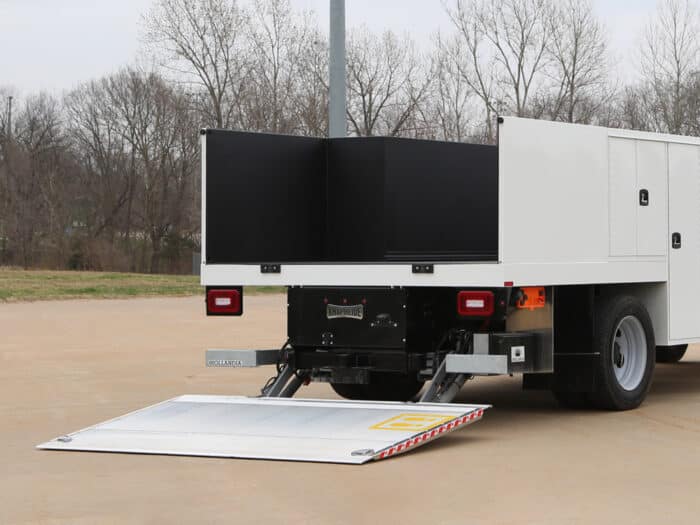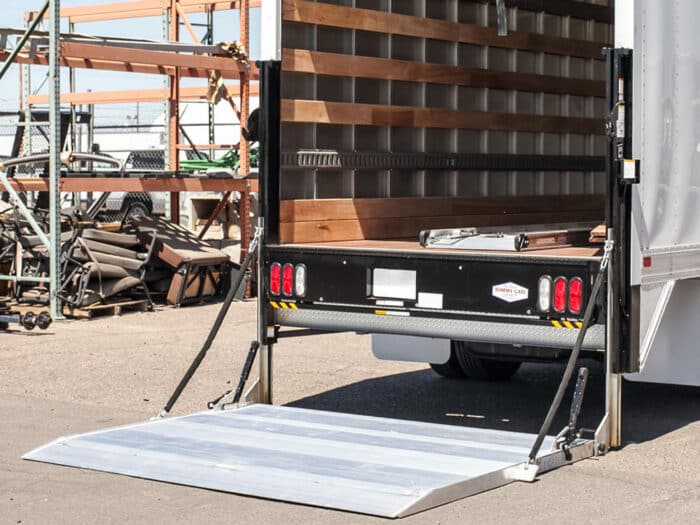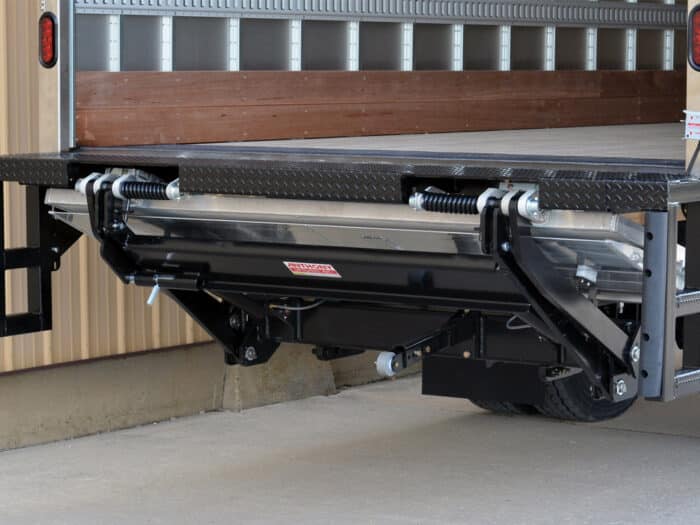
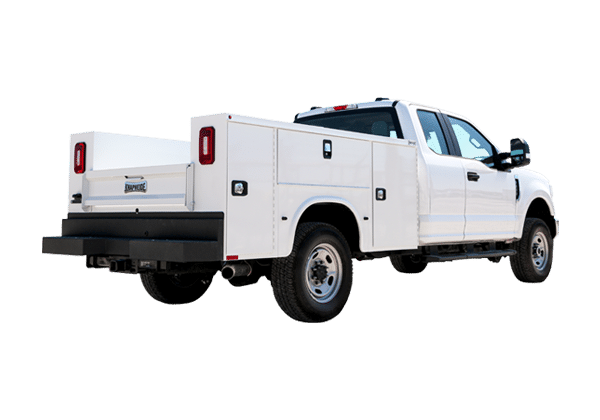
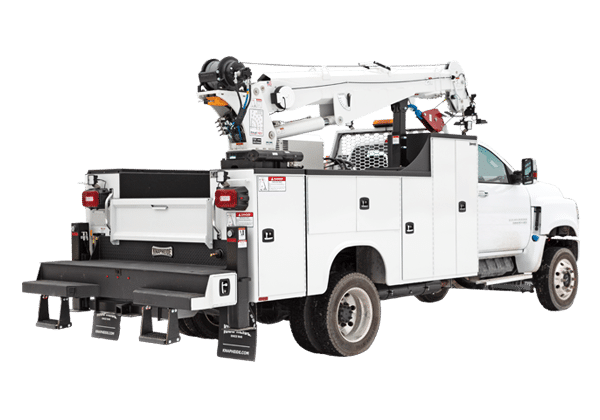
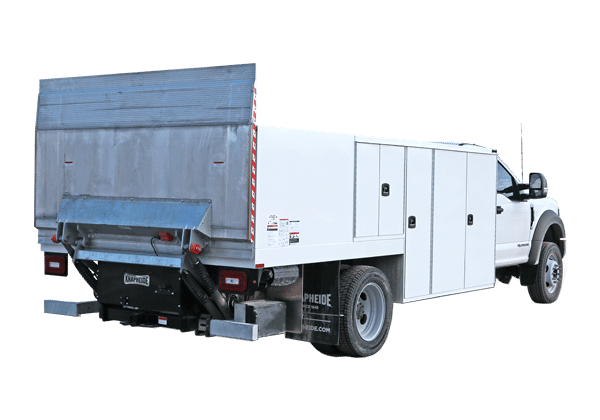
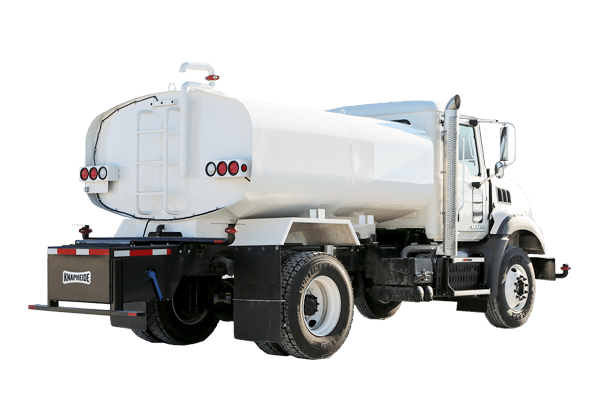
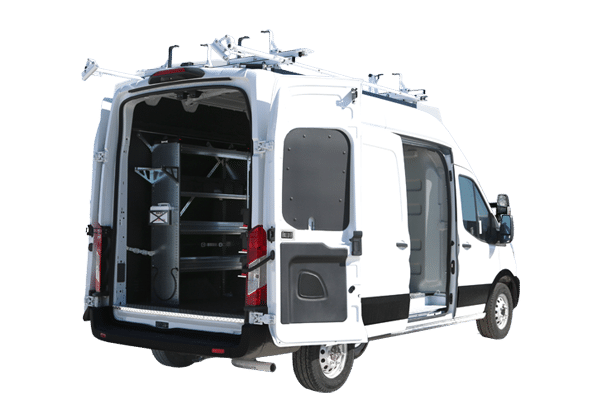

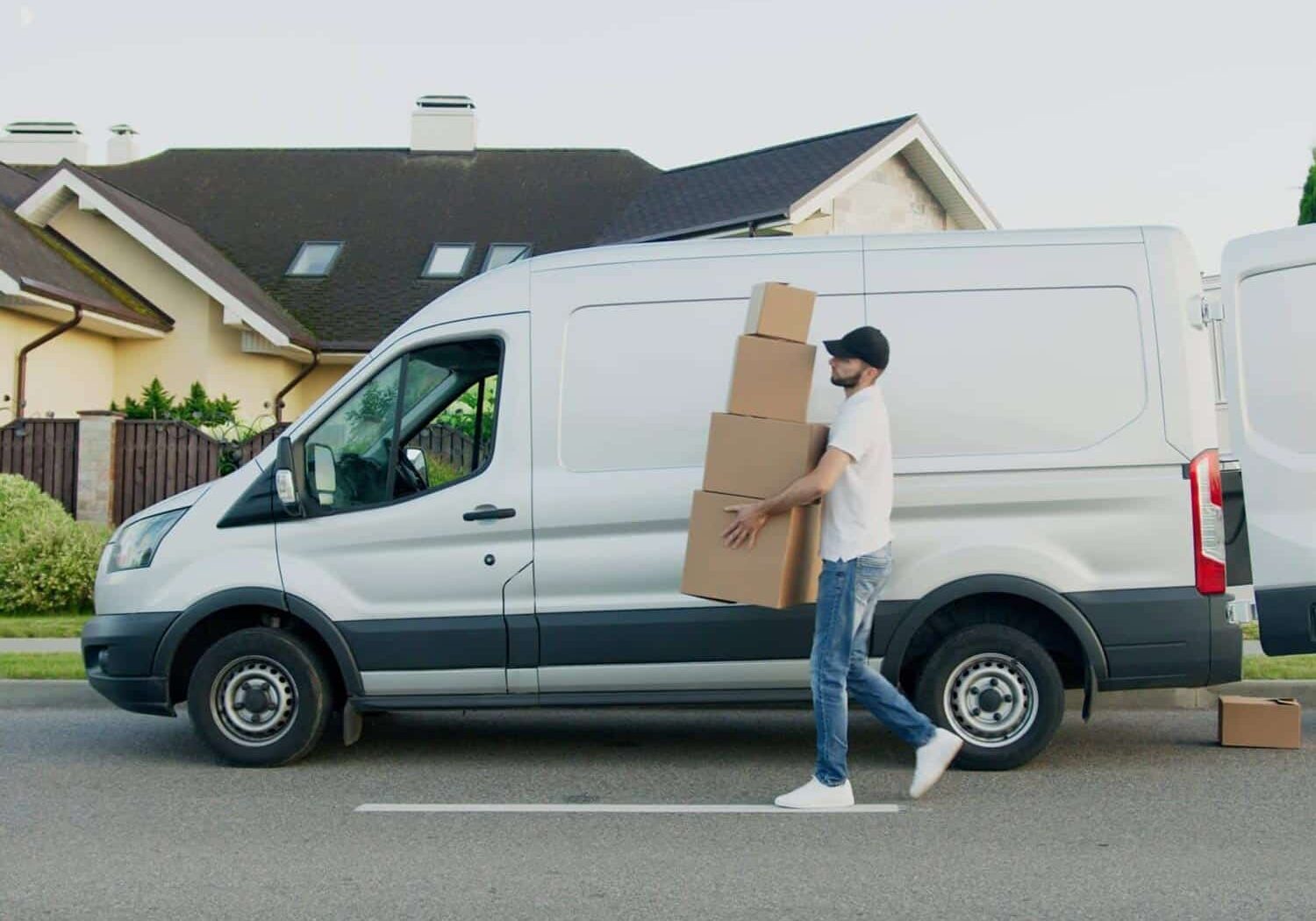


These rear or side mounted platforms assist in the loading and unloading of goods, typically heavy or large items, from ground level to the cargo area of the vehicle or vice versa. The incorporation of liftgates significantly enhances operational efficiency by streamlining these tasks, thereby minimizing the time and labor demands on users. They reduce the inherent risks associated with manual handling, contributing to a safer environment and mitigating the risk of injuries among personnel.
Suppliers

Tommy Gate

Maxon

Anthony Liftgates

Dhollandia

Palfinger

Thieman

Waltco
Interested?
Types of Liftgates

Cantilever Liftgates
Cantilever liftgates store upright against the backend of the vehicle and will either cover the rear door or tailgate or sometimes replace them entirely. This conventional style of liftgates offers the largest platforms available and work by pivoting on an arm from the stowed to a deployed position.
Rail Liftgates
Operating on a vertical rail system affixed to the truck’s rear doorway, a rail or column liftgate supports the raising and lowering of loads on a level platform from cargo area to the ground and vice versa. When not in use, it typically folds flush with and covers a portion of the rear doorway.
Tuck Under Liftgates
Positioned on the rear of a truck, a tuck under liftgate is designed to fold and stow away safely underneath the body when not in use or traveling. This also permits unhindered access to the cargo area, an important capability for some when loading and unloading contents via dock or forklift.